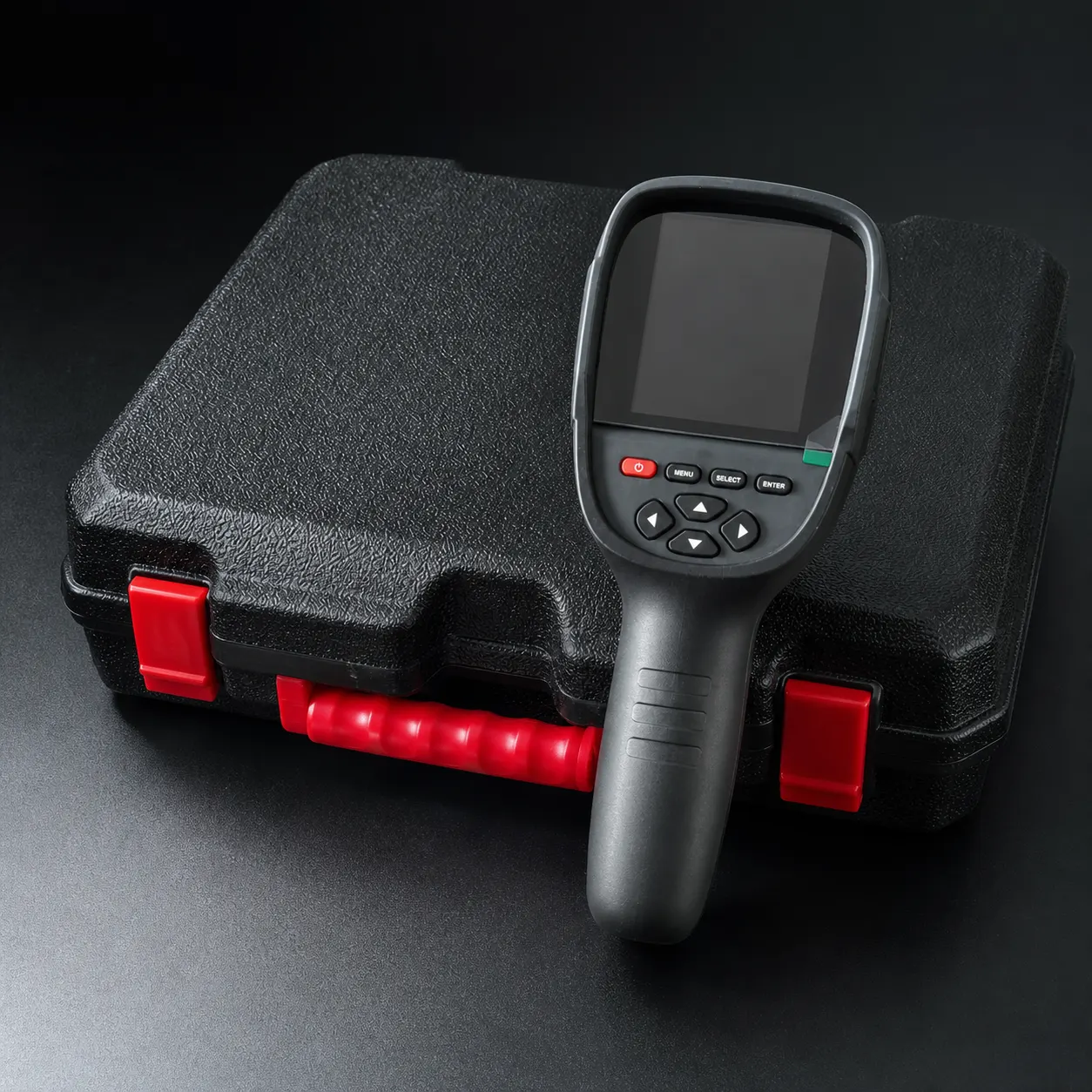
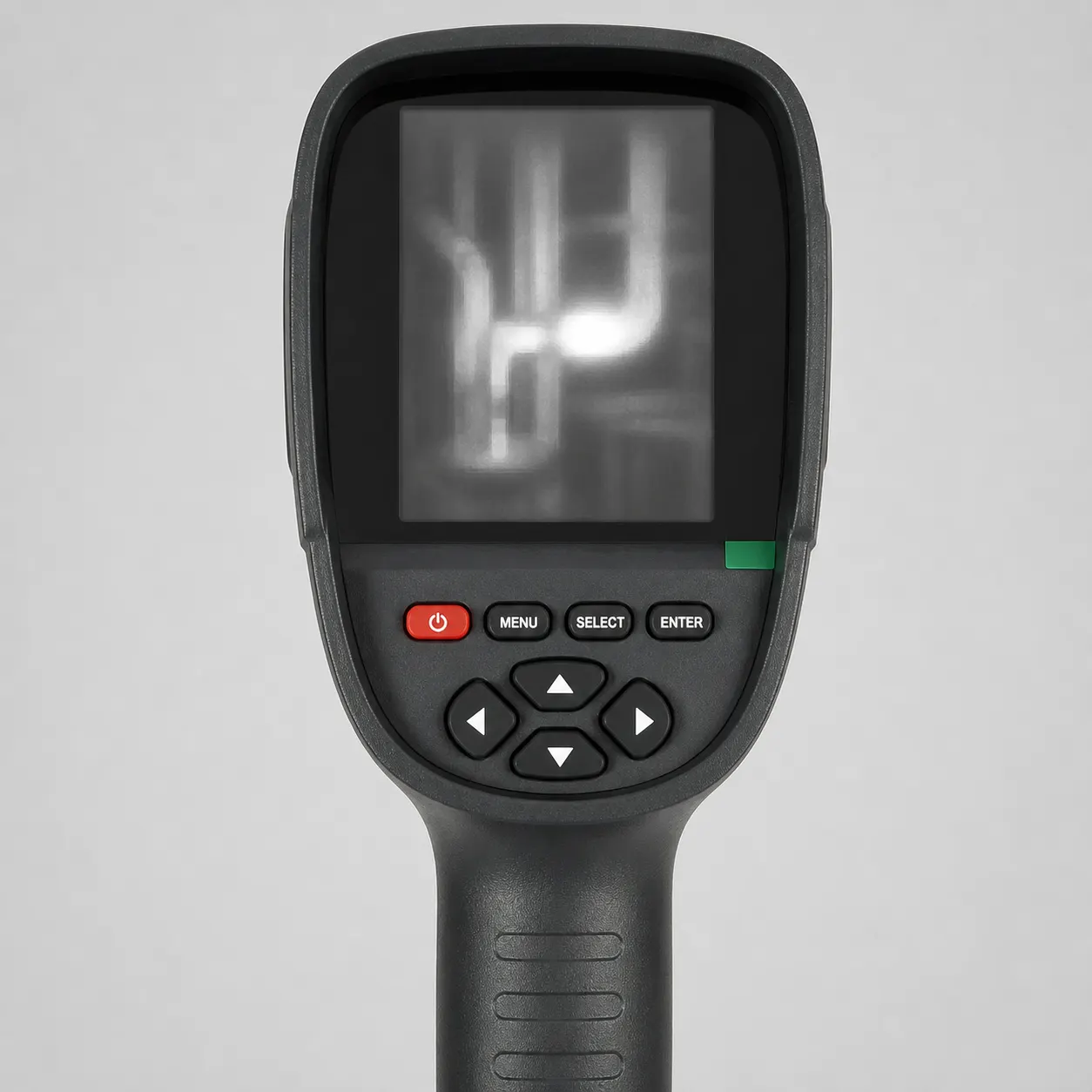
Short answer: A thermal camera can help you compare cold walls, window reveals, door edges and other surface patterns before deciding what to inspect next. The handheld camera shows a white-hot image, saves BMP files to 8 GB of built-in storage or an SD card, and runs on a rechargeable lithium battery. That is a portable visual record for a homeowner, landlord or tradesperson. Keep the picture with the room and the weather, and use a damp check or a surveyor when you need the cause.
What the camera can show
A cold corner, window edge or door threshold may look different from the surrounding surface when indoor and outdoor conditions create a useful temperature contrast. The white-hot palette on the LED screen helps you record that pattern and compare one area with another. Save the BMP, note the room, and use that record when you decide what to inspect next.
The product page also lists BMP image saving and an SD card slot. That is useful when a homeowner wants to show a builder where a cold patch appears, or when a landlord wants to compare the same room on different dates. Keep the room, surface and conditions with each saved image.
| Observed pattern | Reasonable next question | Do not claim from the image alone |
|---|---|---|
| Cold external corner | Could air movement, insulation or room conditions need checking? | Proven damp or failed insulation |
| Cool window reveal | Are seals, ventilation and surface conditions consistent? | A definitive leak or defect |
| Warm pipe route | Does the visible route match the heating or plumbing layout? | Exact pipe temperature or system fault |
Control the inspection conditions
Start with the room where the complaint is strongest, then compare it with a room that feels normal. Note whether the room has been heated, whether direct sun has warmed a surface and whether furniture or curtains cover part of the wall. A consistent walk-round makes the images easier to interpret than a collection of dramatic close-ups.
Scan the wall, corners, window frame, sill, door edge, skirting and accessible ceiling or loft-hatch area in the same order. Use the same palette and save a wider image before a closer view. The point is to preserve context, not to make the coldest colour look like a final answer.
- Write down the room, surface, date and recent heating or weather conditions.
- Scan a broad area first, then capture the most relevant cold or warm pattern.
- Repeat the same sequence in a comparison room before drawing a conclusion.
- Use the saved images to choose a building check, monitoring step or professional enquiry.
Damp limits and buying checks
GOV.UK guidance treats damp and mould as issues that need attention to their causes and the condition of the home. A thermal image may help you explain where a surface is colder. Moisture, leaks and mould still need their own check. Escalate persistent mould, leaks or suspected building defects to the appropriate competent professional.
What you can rely on is the picture itself: a white-hot thermal image, BMP files on 8 GB of built-in storage or an SD card, an IP55 body and a rechargeable lithium battery. Use those records to show where a surface looked colder, then bring in the check that matches the problem.
Choose the next step
A small cold patch beside a door may justify checking draught paths and seals. A repeated pattern around a loft hatch may justify inspecting accessible insulation. A suspected leak, persistent mould or disagreement about responsibility needs more than a colour image. Use the camera to make the next question clearer, then use the right method to answer it.
At £232.85 with VAT included, the purchase makes most sense when you expect repeated room, property or maintenance checks. If the need is one formal report, borrowing a suitable instrument or commissioning a survey may be the more direct route. The product page lists Free UK Delivery and 30-day returns, but those commercial terms do not change the technical limits.
Related guides and product details
Take the handheld camera round for visual heat-pattern records you can save and look at again. Read Thermal Camera for Home Inspection: UK Buyer Checks for related guidance. Read Thermal Imaging Camera for Cold Spots in a House for related guidance. Review the documented specification on the Handheld Infrared Thermal Imaging Camera product page before ordering.
Sources and safety context
- White-hot thermal image, BMP saving, an SD card slot, 8 GB of built-in storage and a rechargeable lithium battery. Current Imagetherm thermal imaging camera product page.
- Supports treating damp and mould as building and health issues requiring appropriate action rather than relying on a visual colour pattern. GOV.UK: Understanding and addressing the health risks of damp and mould in the home.